
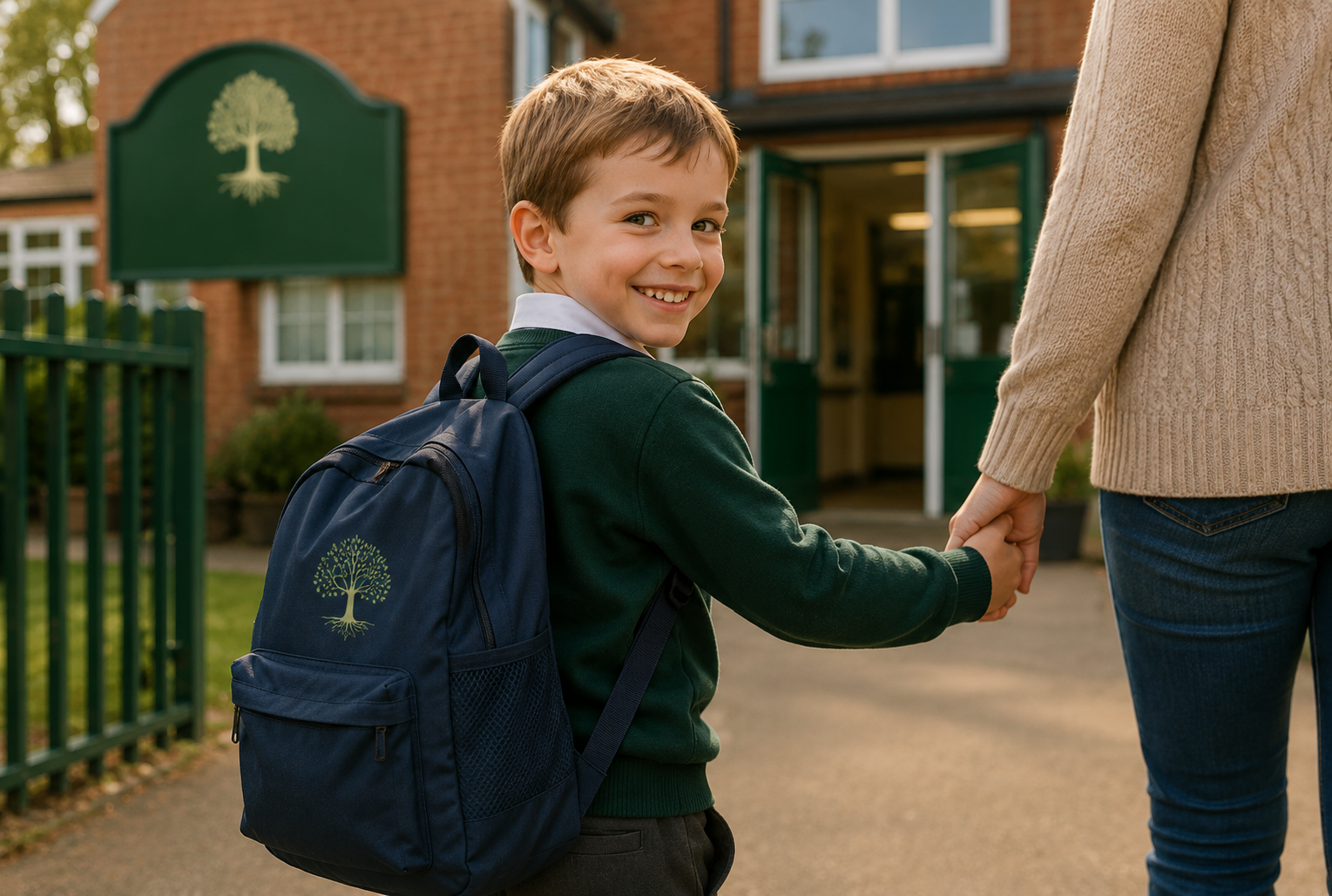
Starting Primary School: Helping Your Child Feel Safe, Confident and Ready for Their Next Adventure
Starting primary school is one of the biggest milestones in a young child's life.
One day they are at home or nursery, surrounded by familiar faces and familiar routines.
The next, they are walking through the gates of a school that feels exciting, unfamiliar and perhaps a little overwhelming.
For many children, this transition is filled with curiosity.
For others, it brings worry.
And for many families, it brings both.
What often surprises parents is that they experience strong emotions too.
Pride.
Excitement.
Anxiety.
Sadness.
Hope.
Sometimes all before the first school bell has even rung.
If this sounds familiar, please know that you are far from alone.
At Sage Mind Clinical Hypnotherapy, based in Whiteley and supporting families across Fareham, Southampton, Portsmouth, Hampshire and online throughout the UK, we understand that starting school is not just a change for children.
It is a change for parents too.
Every Child Adjusts Differently
Some children run into the classroom without looking back.
Others hold tightly onto a parent's hand.
Some appear confident before school but become emotional at drop-off.
Others seem worried beforehand yet settle within minutes.
There is no single "normal" reaction.
Every child has their own personality, temperament and way of responding to change.
Comparing your child with others rarely helps.
Instead, try to focus on understanding what your own child needs.
Some children need reassurance.
Others need time.
Many simply need to know that the adults around them believe they can cope.
Why Starting School Can Feel So Big
When adults think about school, we often think about reading, writing and making friends.
Children experience something much bigger.
They are entering an entirely new world.
New adults.
New routines.
New expectations.
New sounds.
New rules.
New friendships.
For a young child, that is an enormous amount to process.
If they feel worried, it does not mean they are not ready.
It often means they recognise that something important is about to happen.
Children's Worries Often Sound Different
Young children do not always say:
"I'm feeling anxious."
Instead, you might hear questions like:
"Will you come back?"
"What if nobody plays with me?"
"What if I need the toilet?"
"What if I get lost?"
"What if I miss you?"
Sometimes they say nothing at all.
Instead, their worries show themselves in different ways.
They may become clingier than usual.
Have more tantrums.
Become tearful.
Struggle to settle at bedtime.
Wake during the night.
These behaviours are often a child's way of saying,
"Something feels different, and I need a little extra reassurance."
Parents Feel It Too
One thing that is not spoken about often enough is the emotional experience of parents.
Perhaps this is your first child starting school.
You may suddenly realise how quickly they have grown.
The little person who once fitted in your arms is now putting on a school uniform and carrying a backpack.
Many parents tell us they hold back tears until after the classroom door closes.
Some feel guilty for feeling emotional.
Please do not.
Starting school marks the end of one chapter and the beginning of another.
It is completely natural for parents to experience that transition too.
Helping Children Feel Safe Before They Feel Confident
Confidence usually grows after children realise they can cope.
Not before.
That is why reassurance matters so much.
Children borrow confidence from the adults around them.
If you remain calm, patient and encouraging, they gradually begin believing:
"Maybe I can do this after all."
That does not mean pretending everything is easy.
It means helping your child understand that feeling nervous and being brave can happen at exactly the same time.
Some of the bravest children are the ones who walk through the school gate despite feeling worried.
That is courage.
The Goal Is Not a Child Who Never Feels Nervous
As parents, it is natural to want to remove every worry from our children's lives.
In reality, learning to cope with new experiences is one of the most valuable skills we can help them develop.
The aim is not to raise a child who never feels anxious.
It is to raise a child who learns:
"I felt nervous before... and I managed."
Those experiences quietly build resilience that stays with them throughout life.
Helping Your Child Feel Ready Before the First Day
Although you cannot remove every uncertainty, there are many gentle ways to help your child feel more prepared.
The goal is not to eliminate every nervous feeling.
It is to help your child believe that they can cope with something new.
Talk About School Positively
Children often take emotional cues from the adults around them.
Try talking about school with calm enthusiasm rather than focusing on worries.
You might say:
"You're going to meet lots of new friends."
"Your teacher is looking forward to meeting you."
"You'll learn so many exciting things."
This does not mean pretending there will never be difficult moments.
It simply helps children associate school with curiosity and opportunity rather than fear.
Visit the School If Possible
Many schools offer transition days or opportunities to visit before term starts.
Walking around the playground.
Finding the classroom.
Meeting the teacher.
Seeing where coats are hung.
Looking at the toilets.
These seemingly small experiences make school feel more familiar.
The more familiar something feels, the less overwhelming it often becomes.
Practise Simple Routines at Home
Children feel safer when life feels predictable.
During the weeks before school starts, you might begin practising:
Getting dressed independently.
Putting shoes on.
Using their school bag.
Following a morning routine.
Eating lunch within a set time.
These activities gently build confidence without making school feel like a test.
Read Books About Starting School
Stories can help children explore feelings through characters who are experiencing similar situations.
Many children find it reassuring to discover that other boys and girls also feel nervous about starting school.
Reading together also creates valuable opportunities for conversations that might not happen otherwise.
What If My Child Cries at Drop-Off?
This is one of the questions many parents worry about most.
It is completely understandable.
Watching your child become upset is incredibly difficult.
However, many teachers will tell you something reassuring.
Most children settle far more quickly than parents imagine.
Often within minutes.
Children are remarkably good at adapting once they become engaged in classroom activities.
If your child's teacher reassures you that they are settled shortly after you leave, try to hold on to that information rather than imagining the worst.
Remember that teachers support children through this transition every single year.
Looking After Yourself Matters Too
Parents often spend so much energy helping their child that they forget about their own emotions.
You may return home after drop-off and find the house feels unusually quiet.
You may wonder what they are doing.
Whether they have made a friend.
Whether they remembered where the toilets are.
Whether they are thinking about you too.
These thoughts are completely natural.
Rather than sitting with growing worry, consider planning something kind for yourself during those first few days.
Meet a friend.
Go for a walk.
Have a coffee.
Keep yourself gently occupied.
Looking after your own wellbeing also helps you feel calmer when your child comes home.
How Sage Mind Clinical Hypnotherapy May Help
At Sage Mind Clinical Hypnotherapy, we understand that starting primary school is a major transition for the whole family.
Some children settle quickly.
Others need a little extra reassurance while they build confidence.
Our approach focuses on helping children feel safe, calm and able to develop confidence at their own pace.
For families looking for gentle support at home, professionally produced children's relaxation and hypnotherapy audio recordings may help create calm bedtime routines and encourage relaxation before the school day.
Some families also benefit from one-to-one support where anxiety or school-related worries are having a significant impact.
Every child is different, and support should always be tailored to their individual needs.
The First Day Is Only the Beginning
It is easy to think that everything depends upon the first morning.
In reality, confidence develops over many days, weeks and months.
Some children settle immediately.
Others need longer.
Neither experience predicts how successful or happy they will be at school.
What children remember most is knowing that someone believed in them.
Someone encouraged them.
Someone was there to listen when they came home.
Those small moments of connection build confidence far beyond the classroom.
Frequently Asked Questions
Is it normal for children to feel anxious about starting primary school?
Yes. Many children experience a mixture of excitement and nervousness before starting school. Beginning a new routine, meeting new people and entering an unfamiliar environment are significant changes for a young child.
What if my child cries every morning?
Many children become upset at drop-off during the first few days or weeks before settling into their new routine. If you are concerned that your child is becoming increasingly distressed or not settling, speak with their class teacher. Schools are experienced in supporting children through this transition.
Should I tell my child not to be nervous?
Rather than encouraging children not to feel nervous, it is often more helpful to let them know that feeling nervous is normal and that they can still be brave even when those feelings are present.
Can hypnotherapy help children with school anxiety?
Clinical hypnotherapy may help some children manage anxiety, build confidence and develop relaxation skills when provided by a suitably qualified practitioner. Support should always be appropriate for the child's age and individual needs.
Does Sage Mind Clinical Hypnotherapy support children starting school?
Yes. Sage Mind Clinical Hypnotherapy supports children experiencing anxiety, confidence issues and school-related worries. Depending on the child's needs, support may include one-to-one sessions or professionally produced children's relaxation and hypnotherapy audio recordings.
Final Thoughts
Starting primary school is a significant milestone.
Not because everything changes in a single day.
But because it marks the beginning of so many new experiences.
New friendships.
New discoveries.
New achievements.
New confidence.
There may be tears.
There may be worries.
There will almost certainly be moments that make you smile.
If your child feels nervous, remember that courage is not the absence of fear.
Courage is taking the next step despite feeling uncertain.
At Sage Mind Clinical Hypnotherapy, we believe every child deserves the opportunity to feel safe, supported and understood as they begin this exciting new chapter.
And every parent deserves reassurance that it is perfectly normal to find this milestone emotional too.
A Thought From Ian
One thing I have learnt through working with children and families is that confidence rarely appears overnight.
It grows quietly.
A child walks into school despite feeling nervous.
The next day becomes a little easier.
A new friendship begins.
A teacher offers encouragement.
Without even noticing, confidence starts replacing uncertainty.
As adults, we sometimes forget that we learnt courage in exactly the same way. One small step at a time.
If your child is about to begin primary school, trust that those small steps will gradually become bigger ones.
Your belief in them is often one of the greatest gifts you can give.