
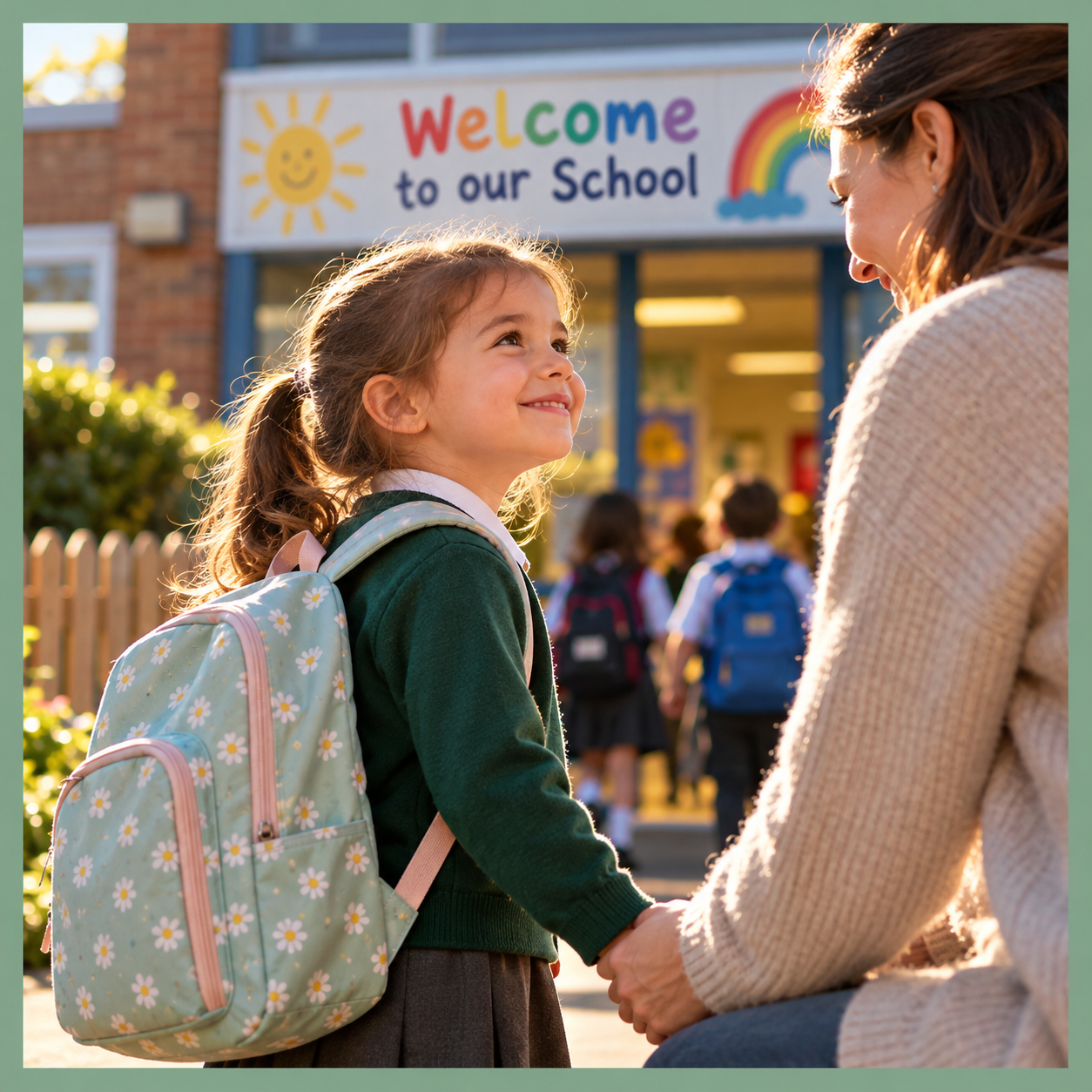
Helping Your Child Feel Calm and Confident Before Starting Primary School
There are few milestones in a parent's life that bring such a mixture of pride, excitement and worry as watching your child prepare to start primary school.
The new uniform hangs neatly in the wardrobe.
Their shoes have been carefully measured.
Their name labels have been ironed into every jumper.
Their lunchbox sits ready on the kitchen worktop.
To anyone looking in from the outside, everything appears organised.
Yet behind those preparations, many parents quietly carry a very different set of emotions.
Will they make friends?
Will they enjoy school?
What if they become upset?
What if they struggle to settle?
What if they cry when I leave?
And perhaps the question many parents never say out loud...
"What if I find it harder than they do?"
If any of those thoughts sound familiar, please know that you are far from alone.
Every September, thousands of families across Hampshire and throughout the UK experience exactly the same mixture of excitement and uncertainty.
Starting school is one of the biggest transitions a young child has experienced. It is also one of the biggest emotional transitions for many parents.
At Sage Mind Clinical Hypnotherapy in Whiteley, we believe that before children can feel understood, parents often need to feel understood first.
Why Starting School Can Feel So Overwhelming
Think about everything your child has known up until now.
Home.
Family.
Favourite toys.
Familiar routines.
Trusted adults.
Then, almost overnight, they are expected to enter a completely new environment filled with unfamiliar faces, different expectations and a daily routine unlike anything they have experienced before.
Even children who appear excited may still feel nervous.
Children often do not have the vocabulary to explain their emotions.
Instead, anxiety may appear as:
- Becoming clingier than usual.
- Trouble sleeping.
- More emotional outbursts.
- Stomach aches with no medical cause.
- Becoming quieter than normal.
- Asking repeated questions.
- Wanting constant reassurance.
- Becoming upset over small things.
These behaviours are not signs that something is wrong with your child.
Very often, they are signs that your child is trying to make sense of a significant life change.
Parents Feel It Too
One part that is rarely talked about is how emotionally difficult this transition can be for parents.
You may have spent years being the person who knows exactly what your child needs.
You know how they like their breakfast.
You know what makes them laugh.
You know when they are tired before they do.
Now, for several hours every day, someone else will be caring for them.
That can feel surprisingly emotional.
Some parents describe feeling guilty for going to work.
Others worry they are worrying too much.
Some find themselves checking the clock all day wondering how their child is getting on.
Others sit in the car after drop-off with tears in their eyes.
All of these reactions are completely understandable.
Loving your child deeply means that significant changes often affect you both.
Every Child Responds Differently
One of the biggest mistakes parents can make is comparing their child with others.
One child may run happily into the classroom.
Another may need several weeks to feel comfortable.
Neither response tells you anything about how successful they will become.
Children develop confidence differently.
Some observe before joining in.
Some build friendships slowly.
Some need extra reassurance.
Some simply need time.
Confidence is not about never feeling nervous.
Confidence grows when children discover that they can cope with new experiences, even when those experiences initially feel unfamiliar.
Helping Your Child Build Confidence Before Their First Day
Although you cannot remove every worry, there are many gentle ways to help your child feel more prepared.
Talk Positively About School
Children often look to the adults around them to judge whether something is safe.
If school is always discussed with warmth, excitement and curiosity, children are more likely to develop positive expectations.
Try asking questions such as:
"What are you looking forward to most?"
"I wonder what games you'll play."
"I wonder who you'll meet."
These conversations encourage curiosity rather than fear.
Practise Small Acts of Independence
Simple activities can build confidence long before September arrives.
For example:
- Putting on their own coat.
- Carrying their own backpack.
- Tidying away toys.
- Choosing their clothes.
- Visiting the school playground if possible.
- Walking past the school together.
Each small success tells your child's brain:
"I can do new things."
Keep Bedtime Calm
Starting school often brings excitement that shows itself at bedtime.
A calm evening routine helps the nervous system begin to relax.
Reducing screens before bed, reading together, listening to calming stories and maintaining a predictable routine all help children feel secure.
For some families, professionally produced relaxation audio designed specifically for children can become a comforting part of this routine, helping little minds gradually settle before sleep.
Accept Their Feelings
Perhaps the most powerful thing you can say is simply:
"It is okay to feel nervous."
Children do not always need their feelings fixed.
Often, they simply need to know their feelings make sense.
When children feel understood, they usually begin calming naturally.
Trying to convince them that there is "nothing to worry about" can sometimes have the opposite effect because, from their perspective, the worries feel very real.
Instead, acknowledging their emotions while gently reminding them that they are capable can build genuine confidence.
Looking After Your Own Wellbeing Matters Too
As parents, it is natural to focus almost entirely on how your child is coping. Yet children are incredibly perceptive. They often pick up on the emotions of the adults around them, even when nothing is said.
This does not mean you have to hide your feelings or pretend everything is perfect. It simply means that taking care of your own wellbeing is also an important part of helping your child.
If you notice your own anxiety increasing, try asking yourself:
- Am I worrying about something that has not happened yet?
- What evidence do I have that my child will not cope?
- Have they successfully adapted to new situations before?
- What would I say to another parent feeling the same way?
Often, we are far kinder to others than we are to ourselves.
Remember that schools welcome new children every year. Teachers understand that the first few days and weeks can be emotional for both children and parents. They have helped countless families through this transition and know that settling in takes time.
A Simple Confidence Routine Before School
Children benefit from routines because routines create a sense of predictability and safety.
In the weeks leading up to school, try spending just a few quiet minutes each evening together.
You might encourage your child to:
- Take three slow, gentle breaths.
- Close their eyes if they feel comfortable.
- Imagine walking confidently through the school gates.
- Picture themselves smiling at their teacher.
- Imagine finding a place to sit.
- Visualise themselves making a new friend.
- Picture you collecting them at the end of the day, proud of what they have achieved.
Young children often respond well to imagination. Their minds naturally create stories and pictures, which means positive visualisation can become a gentle way of building familiarity before the real experience arrives.
Why Some Children Need Longer to Settle
One of the most reassuring things parents can hear is this:
There is no "correct" amount of time for a child to settle into school.
Some children appear confident on day one and then become emotional a week later.
Others cry at every drop-off for two weeks before suddenly running happily into class.
Some children come home exhausted because they have worked so hard to manage all the new sights, sounds and social interactions.
This does not mean they dislike school.
It often means they are processing an enormous amount of new information.
Rather than asking, "Did you have a good day?", try gentler questions such as:
- What made you smile today?
- What was something new you noticed?
- Who did you play with?
- What are you looking forward to tomorrow?
These open conversations without placing pressure on your child to give the "right" answer.
How Sage Mind Clinical Hypnotherapy May Help
At Sage Mind Clinical Hypnotherapy, based in Whiteley and supporting families across Fareham, Southampton, Portsmouth, Hampshire and online throughout the UK, we understand that every child is different.
Our approach is never about forcing confidence or expecting children to simply "get over it".
Instead, we focus on helping children feel emotionally safe, understood and supported.
For younger children, that often begins with creating opportunities to relax, use their imagination and experience calm in a gentle, age-appropriate way.
For parents, it means having someone who understands that supporting a child through change can feel emotionally demanding too.
Sometimes, simply knowing that your worries are normal can make a significant difference.
Gentle Support Through Children's Relaxation Audio Recordings
Some children find comfort in familiar bedtime routines.
Professionally produced children's relaxation recordings can become part of that routine, helping children unwind after busy days and encouraging a calmer transition into sleep.
Rather than replacing parental reassurance, these recordings are designed to complement it.
Listening together can create a peaceful moment at the end of the day, giving children space to relax, settle their thoughts and approach the next day feeling a little more prepared.
Every child responds differently, but many parents find that introducing calming routines before significant life events can help create a greater sense of familiarity and emotional security.
You Are Not Failing if This Feels Emotional
One message we hope every parent takes away is this:
If you feel emotional about your child starting school, it does not mean you are overreacting.
It means you care.
This is a milestone for your child, but it is also a milestone for you.
You have spent years nurturing, protecting and guiding them.
Now you are watching them take another important step towards independence.
That can feel wonderful and heartbreaking at exactly the same time.
Both emotions can exist together.
Frequently Asked Questions
Is it normal for children to be anxious about starting primary school?
Yes. Many children feel nervous before starting school. New environments, unfamiliar routines and meeting new people are significant changes. A little anxiety is a common and understandable response.
How long does it take children to settle into school?
Every child is different. Some settle within days, while others need several weeks. Patience, reassurance and consistent routines often help children feel more secure over time.
What if my child cries at school drop-off?
Many children become upset during the first few days or weeks. Teachers are experienced in helping children settle, and most children calm shortly after parents leave. Keeping goodbyes warm, calm and consistent is usually more helpful than making them longer.
Can relaxation techniques help children feel calmer?
Gentle breathing exercises, visualisation, calming bedtime routines and age-appropriate relaxation recordings can all help children learn to settle their bodies and minds during periods of change.
Does Sage Mind Clinical Hypnotherapy work with children?
Sage Mind Clinical Hypnotherapy offers support that is tailored to the individual child and family. Depending on age and circumstances, this may include relaxation techniques, confidence-building approaches and professionally produced children's audio recordings designed to encourage calm and emotional wellbeing.
Final Thoughts
Starting primary school is one of those moments that families remember for years to come.
There may be excitement.
There may be tears.
There may be moments where both you and your child wonder whether everything will be okay.
The reassuring truth is that most children adapt remarkably well when they feel supported, understood and given time.
There is no perfect parent, and there is no perfect first day.
There is simply the next small step.
At Sage Mind Clinical Hypnotherapy, we believe that every child deserves to begin this new chapter feeling as calm and confident as possible, and every parent deserves reassurance that they do not have to navigate these emotions alone.
Whether you are looking for one-to-one support, guidance, or calming children's audio recordings to become part of your family's bedtime routine, we are here to help you move forward with confidence, compassion and understanding.